Square Crossflow Cooling Towers: Features and Selection Notes
Two-sided air inlet, gravity distribution, modular cells and low-noise fans — what to check before you specify a crossflow tower.
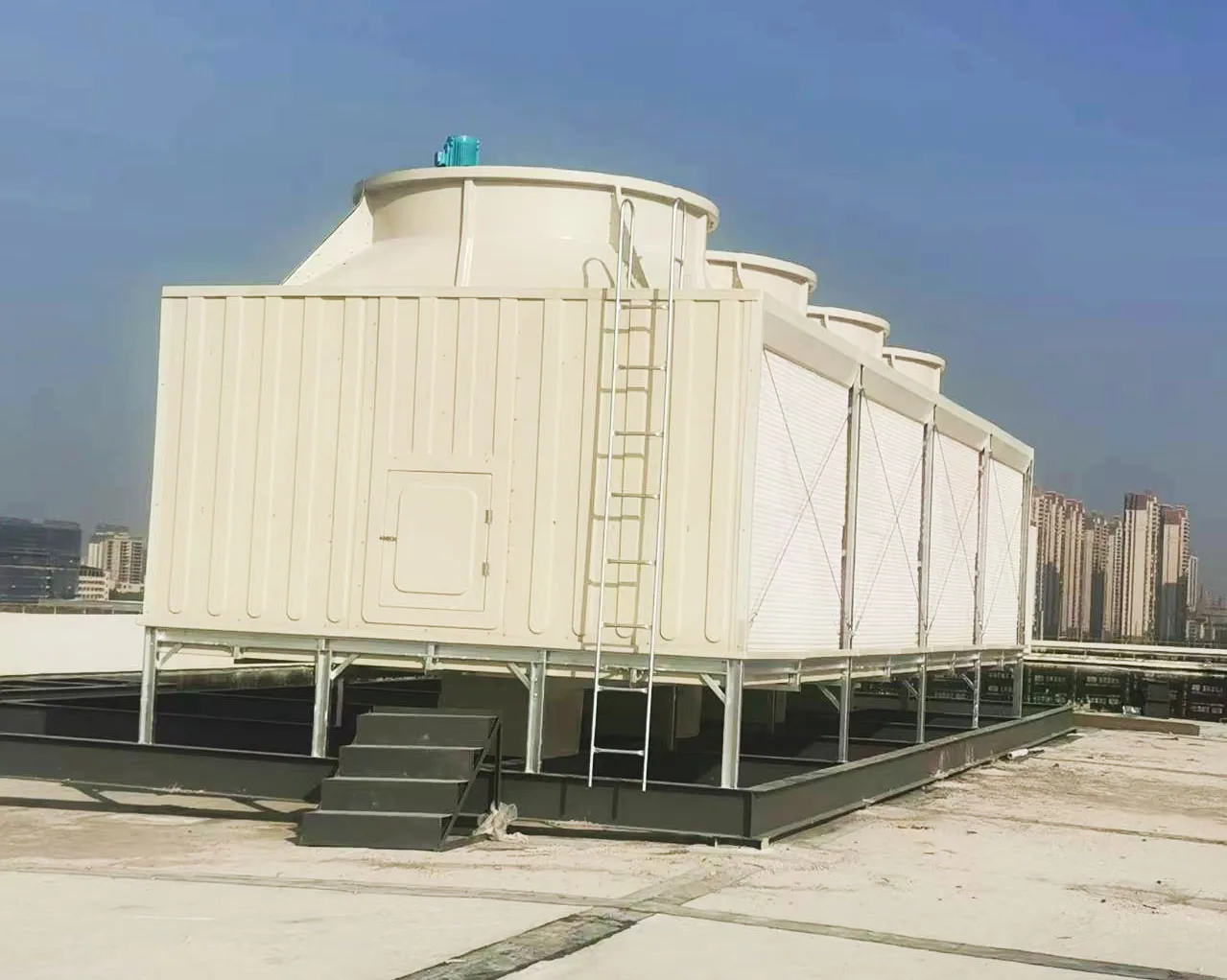
How it works
In a square crossflow cooling tower, air enters from both sides and travels horizontally through the fill while hot water falls vertically. A top-mounted induced-draft fan discharges the warm, moist air. Gravity-fed hot-water basins replace pressurised spray nozzles, which lowers pump head and makes the distribution system easy to inspect while the tower is running.
The dimpled point-wave PVC fill is bonded into rigid blocks for strength, with a water-collection detail at the tail to limit drift.
Advantages in practice
Crossflow towers are quiet, easy to maintain and tolerant of part-load operation. Because adjacent air chambers are isolated, one cell can be cleaned while the others keep running — a real advantage for plants that cannot stop. Modular cells also make future capacity expansion straightforward.
The trade-off is a larger footprint than an equivalent counterflow tower. Where plot space is tight, compare both arrangements on the same duty before deciding.
Specification checklist
Confirm the design wet-bulb and required approach, check the low-noise requirement and available plan area, specify the fill type from the water analysis, and decide on two-speed or VFD motor control. Ask for the general arrangement drawing and the noise data sheet with the quotation.
Need this applied to your project?
Send your heat load, flow rate and design wet-bulb temperature for a technical proposal.
Request a QuoteTalk to a cooling tower engineer
Technical selection, drawings and a quotation — usually within one business day.