Seasonal Performance of Closed Circuit Cooling Towers
Thermal ratings are built around summer wet-bulb conditions. What happens in spring, autumn and winter — and how should controls adapt?
The design basis is summer
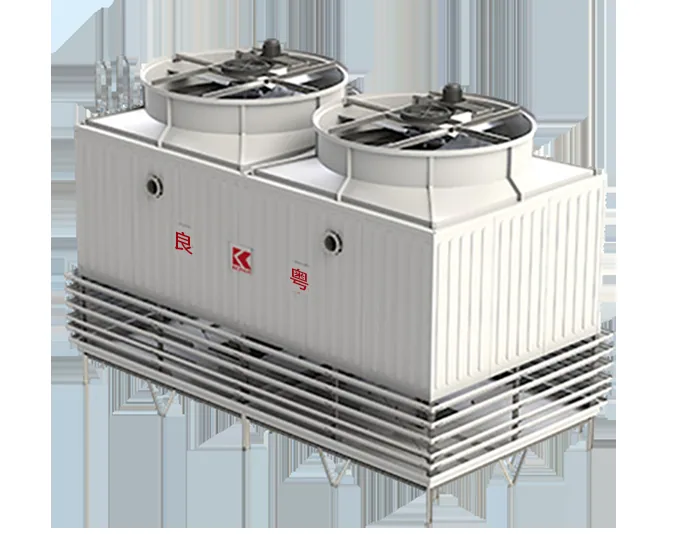
A closed circuit cooling tower uses a tube coil, a spray-water loop and induced airflow to reject heat indirectly. Its published thermal curves are normally built around summer design conditions, often with wet-bulb temperatures in the 20–35 °C band.
In transition seasons and winter the ambient wet-bulb can fall below 15 °C. Actual performance then deviates from the catalogue curve: the tower has far more capacity than the process needs, and uncontrolled operation wastes fan and pump energy.
Adjustment strategies
Stage the fans and spray pumps, use VFD control against leaving-water temperature, and allow dry operation when ambient conditions permit. Keep a minimum coil flow to avoid stagnation and freezing risk. In dry mode the spray loop is stopped and the unit behaves closer to an air-cooled exchanger, with a higher but still acceptable leaving temperature.
Seasonal control should also include water-treatment adjustments: lower evaporation in cold weather changes cycles of concentration and biocide demand.
What to document
Ask the supplier for seasonal operating sequences, setpoints, alarm thresholds and a winter drain-down procedure. A well-documented control strategy protects the coil and stabilises product temperature year-round.
Need this applied to your project?
Send your heat load, flow rate and design wet-bulb temperature for a technical proposal.
Request a QuoteTalk to a cooling tower engineer
Technical selection, drawings and a quotation — usually within one business day.