How to Choose the Right Cooling Tower for Your Project
A structured selection workflow: heat load, wet-bulb temperature, water quality, footprint, noise, circuit type and lifecycle cost.
Start with the duty, not the model number
Define the heat load or circulating flow, inlet and outlet water temperatures, and the design wet-bulb temperature for the site. From these, the required range and approach are fixed. An approach that is too tight will inflate tower size and cost steeply, so confirm the process genuinely benefits from colder water.
Then check water quality, available footprint, height restriction, noise limits, power supply and whether winter operation or freeze protection is needed.
Choose the circuit and airflow arrangement
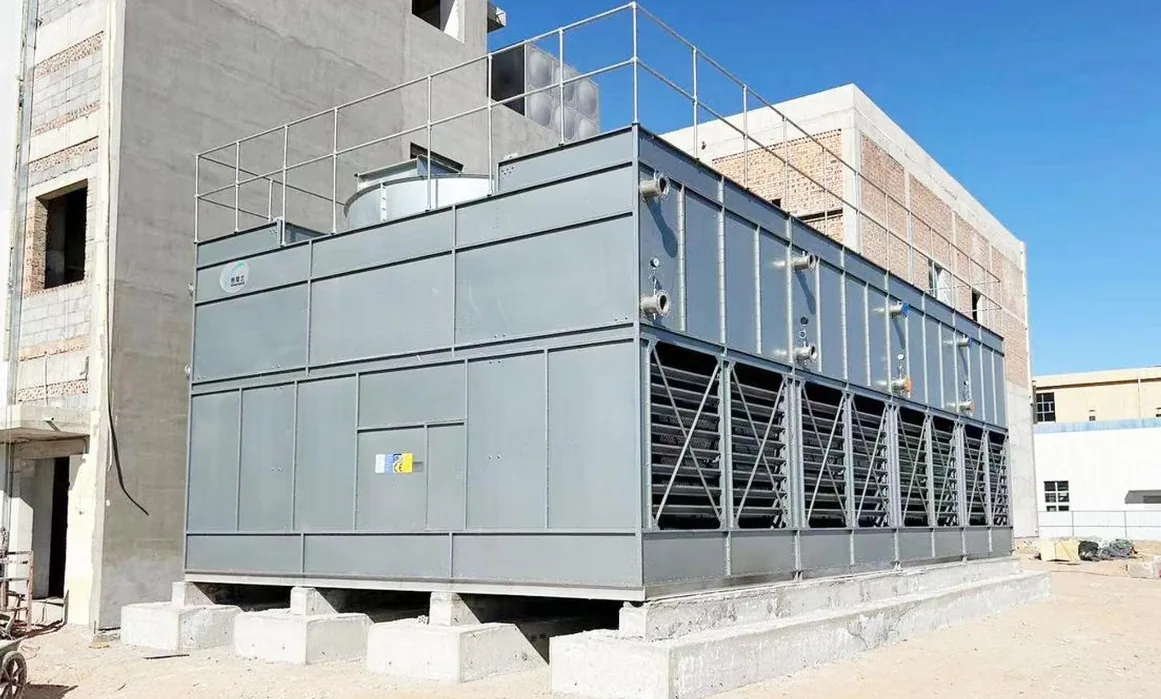
Open circuit towers give the best thermal performance and lowest first cost, but expose the circulating water to air. Closed circuit fluid coolers keep the process loop sealed — worth it for furnaces, glycol loops and contamination-sensitive processes. Crossflow is easier to service and has lower pump head; counterflow is more compact and thermally efficient. Round FRP packaged towers suit smaller HVAC and light-industrial duties.
Where residual pump head is available, a fanless water-driven tower removes fan motor electricity entirely. Where plume or water use is restricted, ask about plume-abatement and water-saving configurations.
Evaluate the whole lifecycle
Compare fan power, pump head, water consumption and treatment, drift losses, fill replacement intervals and spare-parts availability — not just the purchase price. Ask for the thermal selection sheet, general arrangement drawing, noise data and a recommended spare-parts list before placing an order.
Need this applied to your project?
Send your heat load, flow rate and design wet-bulb temperature for a technical proposal.
Request a QuoteTalk to a cooling tower engineer
Technical selection, drawings and a quotation — usually within one business day.