How Does a Cooling Tower Work?
A plain-language explanation of evaporative heat rejection, from hot-water inlet to cold-water basin — plus the key terms buyers need.
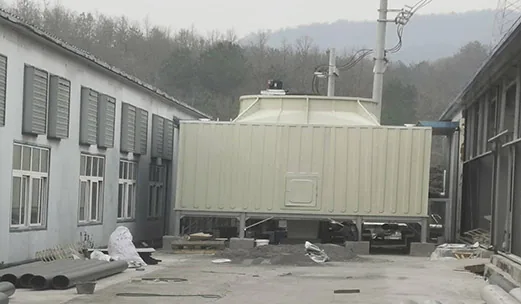
The basic loop
A cooling tower is a heat-rejection device. Warm water from a chiller condenser or an industrial process is pumped to the top, distributed over fill media, and brought into contact with ambient air. A small fraction of the water evaporates; the latent heat carried away by that evaporation cools the rest, which collects in the basin and returns to the process.
Only a small percentage of the circulating flow is lost to evaporation — the tower is a recirculating system, not a once-through water consumer.
The parts that matter
Fill media creates the contact area; the distribution system wets it evenly; fans (or a water turbine in a fanless tower) move the air; drift eliminators catch entrained droplets; the basin collects cooled water; and the structure carries it all. Motors, reducers, nozzles and float valves are the service items that keep the system healthy.
The performance ceiling is the ambient wet-bulb temperature. A tower cannot cool water below that limit, which is why the design wet-bulb is the first number any selection engineer asks for.
Key terms
Range = inlet temperature minus outlet temperature. Approach = outlet temperature minus wet-bulb temperature. Open circuit means process water contacts air directly; closed circuit means a coil keeps it sealed. Induced draft places the fan at the discharge; forced draft places it at the inlet.
Need this applied to your project?
Send your heat load, flow rate and design wet-bulb temperature for a technical proposal.
Request a QuoteTalk to a cooling tower engineer
Technical selection, drawings and a quotation — usually within one business day.