Cooling Tower Drift: Causes and Practical Solutions
Why towers lose water droplets through the discharge air, how to diagnose the cause, and what high-efficiency drift eliminators actually change.
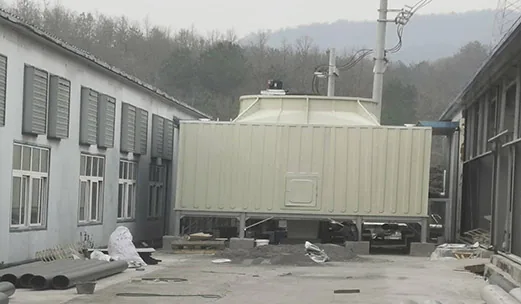
What drift is
Drift is liquid water carried out of the tower as entrained droplets in the exhaust air — distinct from the water vapour of evaporation. It wastes water and treatment chemicals, wets nearby roofs and equipment, and can contribute to hygiene concerns around evaporative cooling.
Modern high-efficiency drift eliminators use multi-pass baffles to force droplets to impact and coalesce, returning them to the basin.
Common causes
Excessive air velocity through the fill, damaged or missing eliminator sections, uneven or over-pressurised spray distribution, blocked fill causing channelling, and fan operation beyond design speed. A sudden increase in drift after maintenance often points to incorrectly reinstalled eliminator panels.
Check the eliminator for gaps, deformation and biological fouling, and compare measured airflow or fan speed against the design value.
Solutions
Restore the correct eliminator geometry, repair or upgrade to a high-efficiency low-drift design, balance the distribution system, clean or replace fouled fill, and use VFD control to avoid excessive fan speed at part load. Re-check make-up water readings after the fix to verify the improvement.
Need this applied to your project?
Send your heat load, flow rate and design wet-bulb temperature for a technical proposal.
Request a QuoteTalk to a cooling tower engineer
Technical selection, drawings and a quotation — usually within one business day.